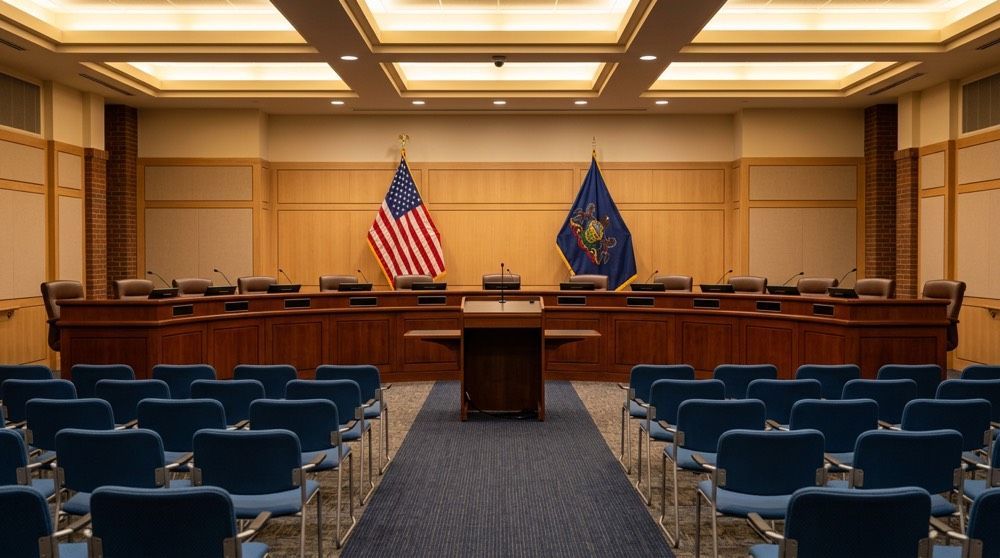
Future Trends in Real Estate Legislation

A look ahead at where real estate law is heading — the emerging technologies reshaping the field, the legislative changes on the horizon, and how owners and investors can prepare.
Real estate law has always evolved alongside the way people buy, sell, finance, and use property — but the pace of change is accelerating. New technologies are transforming how transactions are conducted and recorded, and lawmakers are responding to pressures ranging from housing affordability to environmental resilience to data privacy. For property owners, developers, and investors, staying ahead of these shifts is more than an academic exercise. The legal landscape that governs a property today may look meaningfully different in a few years, and decisions made now can carry consequences well into that future. At Bingaman Hess, our
real estate attorneys help clients navigate exactly this kind of change. This article examines the trends most likely to shape real estate legislation in the period ahead.
Emerging Technologies and Their Impact
Technology is changing real estate practice faster than at any point in recent memory, and the law is working to keep up. Electronic and remote online notarization, now widely adopted, has made it possible to execute and witness real estate documents without parties being physically present — a convenience that also raises new questions about fraud prevention and identity verification. Digital recording systems are streamlining how deeds and mortgages are filed and searched, and some jurisdictions are exploring blockchain-based registries that could one day make title records more transparent and harder to falsify.
Other technologies are pressing on the law from different directions. The growth of smart buildings and connected devices raises issues of data ownership and privacy in both residential and commercial settings, and questions about who is responsible when those systems fail. Artificial intelligence is increasingly used in property valuation, marketing, and tenant screening, prompting scrutiny over accuracy, transparency, and the potential for discriminatory outcomes that could run afoul of fair housing laws. Even the way properties are marketed and toured — through virtual reality and online platforms — implicates disclosure and advertising rules written for an earlier era. The common thread is that each innovation creates efficiency while also creating new legal questions, and legislatures and courts are steadily building the framework to answer them. Owners and professionals who adopt these tools should do so with an eye toward the evolving rules that govern them, and with documentation practices that can withstand later scrutiny.
Legislative Changes on the Horizon
Beyond technology, several policy currents are driving real estate legislation. Housing affordability remains a dominant concern, prompting measures aimed at increasing supply — reforms to zoning and land use that encourage higher-density and mixed-use development, incentives for affordable housing, and limits on certain restrictive practices. Landlord-tenant law continues to be an active area, with ongoing attention to eviction procedures, security deposits, habitability standards, and tenant protections that vary considerably from one jurisdiction to the next.
Environmental and resilience considerations are also shaping the field. Energy-efficiency and building-performance requirements are expanding, climate-related disclosure obligations are emerging in some markets, and flood and natural-hazard rules are influencing where and how development occurs. Property tax structures, transfer taxes, and the treatment of real estate investment vehicles periodically come under legislative review as well, with direct consequences for investors' returns. Because so much of this activity happens at the state and local level, tracking the right legislative bodies matters; the National Conference of State Legislatures maintains useful resources on
state real estate and housing legislation for those who want to follow the trends as they develop. None of these currents moves in a straight line, and the specifics differ markedly by jurisdiction. What they share is a direction of travel toward greater regulation of how property is developed, financed, disclosed, and operated — a reality that rewards those who watch the legislative pipeline rather than react to it after the fact.
Predictions and How to Prepare
While no one can predict legislation with certainty, the prudent approach is to anticipate change rather than be caught off guard by it. Owners and investors can prepare by staying informed about proposed legislation in the jurisdictions where they hold property, building flexibility into long-term plans, and reviewing existing holdings against likely regulatory shifts — for example, assessing how new energy or disclosure requirements might affect a building's value or operating costs before those requirements take effect.
Documentation and compliance discipline matter more than ever. As recording, disclosure, and transaction processes become more digital and more regulated, maintaining clean records and following current procedures protects against disputes and challenges down the road. Investors evaluating new acquisitions should factor the trajectory of the law into their due diligence, considering not only how a property is regulated today but how it is likely to be regulated tomorrow — a discipline closely related to the broader practice of
risk management in real estate transactions. Above all, preparation benefits from professional guidance. Real estate counsel who track legislative developments can help owners and investors interpret what is coming, position their holdings accordingly, and respond to new requirements with confidence rather than scrambling to catch up. In a field defined by change, that forward-looking perspective is one of the most valuable assets a property owner can have.
Consult With One of Our Real Estate Attorneys
The real estate attorneys at Bingaman Hess help owners, developers, and investors navigate a changing legal landscape — from structuring transactions and ensuring compliance to anticipating how new technologies and legislation will affect their property. Whether you are acquiring, developing, or managing real estate, our team provides the highest level of representation and personalized attention. Call us today at 610.374.8377 or contact us online to schedule a consultation.
This article is for informational purposes only and does not constitute legal advice. No one may rely on this information without consulting an attorney. Anyone who attempts to use this information without attorney consultation does so at their own risk. Bingaman Hess is not and shall never be responsible for anyone who uses this information. It is not legal advice.
News & Information