Subdivision and Land Development Regulations

How subdivision and land development regulations work — the planning rules that govern new development, the role of community consultation, and what legal compliance requires.
Few areas of municipal law affect a community's future as directly as subdivision and land development regulation. When a parcel of land is divided or improved for new homes, businesses, or infrastructure, a framework of local ordinances determines how that development proceeds — where streets and utilities go, how stormwater is managed, what setbacks apply, and how the project fits into the surrounding community. For municipalities, these regulations are a primary tool for managing growth responsibly. For developers and property owners, understanding them is the difference between a smooth approval and a costly delay. At Bingaman Hess, our
municipal law attorneys work on both sides of these matters, and this article explains how the process works and what compliance involves.
The Planning Regulations That Govern Development
Subdivision and land development ordinances, adopted under Pennsylvania's Municipalities Planning Code, set the rules for dividing land and constructing improvements upon it. A subdivision generally refers to dividing a single tract into multiple lots, while land development refers to improving a parcel for a new use — such as a commercial building, an apartment complex, or a new street network. Both trigger a regulated review process designed to ensure the work meets local standards before a shovel goes in the ground.
These regulations typically address a wide range of technical requirements: minimum lot sizes and dimensions, street design and access, the provision of water, sewer, and stormwater management facilities, easements and rights-of-way, sidewalks, lighting, landscaping, and the dedication of land or fees for public improvements. They work hand in hand with the municipality's zoning ordinance, which governs how land may be used, while the subdivision and land development ordinance governs how it is physically laid out and built. A successful project has to satisfy both. Because the standards are detailed and interrelated, developers usually begin with a sketch or preliminary plan, refine it through municipal review, and proceed to a final plan that, once approved and recorded, authorizes the work. Understanding the sequence — and the standards that apply at each stage — allows applicants to design projects that can actually be approved rather than redrawn. The American Planning Association offers a helpful
overview of subdivision regulation for those who want to understand the broader planning framework these ordinances sit within.
The Role of Community Consultation
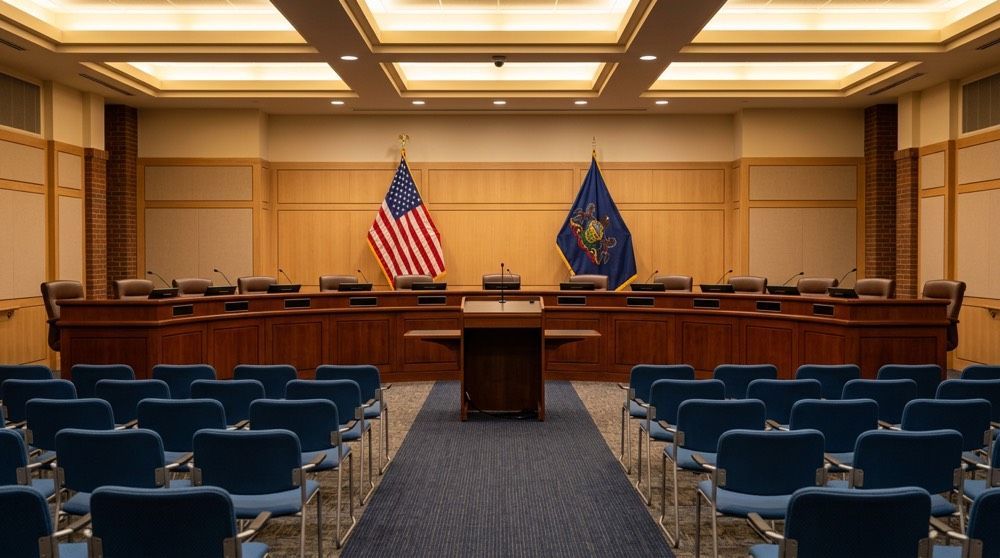
Land development does not happen in a vacuum. Subdivision and land development review is, by design, a public process, and community input is built into it. Municipal planning commissions review applications in public meetings, and governing bodies — councils or boards of supervisors — typically hold public hearings before granting final approval. Residents, neighboring property owners, and other stakeholders have the opportunity to learn about proposed projects and voice support, concerns, or objections.
For municipalities, this consultation serves an important function: it surfaces local knowledge about traffic, drainage, character, and infrastructure that may not be apparent from the plans alone, and it builds legitimacy for the decisions that follow. For developers, engaging with the community early and constructively is often a strategic advantage. Projects that address neighborhood concerns proactively — adjusting access points, adding buffering, or phasing construction — tend to move through approval more smoothly than those that arrive as a surprise. At the same time, municipalities must conduct this process fairly and within the bounds of the law. Decisions must be based on the standards in the ordinance, supported by the record, and applied consistently. A denial driven by public sentiment rather than the objective requirements of the ordinance can expose a municipality to a successful appeal, which is why sound legal guidance matters at every stage of review.
What Legal Compliance Requires
Legal compliance in subdivision and land development cuts in two directions. For applicants, it means meeting every applicable standard in the ordinance and following the prescribed procedure — submitting complete plans, securing required permits, providing financial security for public improvements, and satisfying any conditions attached to approval. Missing a procedural step or an engineering requirement can stall a project or invalidate an approval, so careful attention to detail throughout the process is essential. Deadlines matter, too: Pennsylvania law imposes specific timeframes on municipal review, and both applicants and municipalities need to track them closely.
For municipalities, compliance means administering the regulations lawfully. Review must occur within the timeframes the law allows, decisions must rest on the criteria in the ordinance, and the reasons for any denial must be stated clearly and tied to specific, identifiable shortcomings. Municipalities must also keep their ordinances current and consistent with state law, since outdated or conflicting provisions invite challenge. Both sides benefit from getting the legal framework right: applicants gain predictability and a defensible approval, and municipalities gain orderly development and a process that holds up if it is questioned. These same considerations carry into related projects — our article on
developing mixed-use properties looks at how zoning and planning rules shape more complex developments. Given how much is at stake in time, money, and community impact, both developers and municipal bodies often rely on experienced counsel to navigate the regulations, manage the approval process, and resolve disputes when they arise.
Consult With One of Our Municipal Law Attorneys
The municipal law attorneys at Bingaman Hess advise municipalities, developers, and property owners on every aspect of subdivision and land development — from drafting and updating ordinances to guiding applications through review and defending or challenging decisions on appeal. Whether you are planning a project, administering a local ordinance, or facing a development dispute, our team provides the highest level of representation and personalized attention. Call us today at 610.374.8377 or contact us online to schedule a consultation.
This article is for informational purposes only and does not constitute legal advice. No one may rely on this information without consulting an attorney. Anyone who attempts to use this information without attorney consultation does so at their own risk. Bingaman Hess is not and shall never be responsible for anyone who uses this information. It is not legal advice.
News & Information