
Pennsylvania Municipal Law: A Guide for Township and Borough Officials
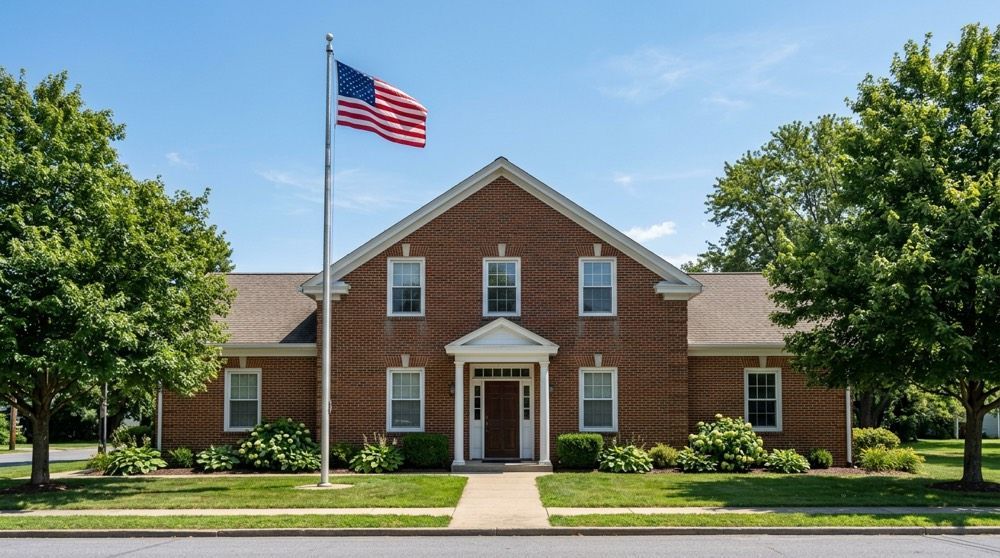
A Bingaman Hess plain-English guide for township supervisors, borough council members, and municipal staff across Reading and Berks County.
A municipal solicitor in Pennsylvania is the attorney who advises a township or borough on the state codes that define its powers, from land use to open-government duties. Because Pennsylvania municipalities are creatures of the Commonwealth, every board decision must trace back to a specific statute — and the solicitor's core job is mapping that authority before officials act.
How Pennsylvania Municipalities Get Their Powers
Pennsylvania local governments hold only the powers the Commonwealth grants them. Unlike the federal or state government, a township or borough has no inherent authority; it acts through statutes the General Assembly has passed, and a court will strike down an ordinance that exceeds those grants.
That authority comes primarily from a set of enabling codes tied to the type of municipality. Second-class townships operate under the Second Class Township Code (53 P.S. §§ 65101 et seq.); boroughs operate under the Borough Code (recodified at 8 Pa.C.S.); and first-class townships operate under the First Class Township Code (53 P.S. §§ 55101 et seq.). A municipality that wants broader flexibility can adopt a home rule charter under the Home Rule Charter and Optional Plans Law (53 Pa.C.S. Ch. 29), which lets it exercise any power not denied by the state constitution, the General Assembly, or its own charter.
The scale of this system is easy to underestimate. According to the Pennsylvania Department of Community & Economic Development, the Commonwealth has 2,560 municipalities — roughly 56 cities, 958 boroughs, one incorporated town, and about 1,545 townships (figures current as of the DCED's 2023 municipal statistics). Berks County alone contains dozens of these units, from the City of Reading to small second-class townships, and each answers to a slightly different code. A solicitor's first task is always to confirm which code governs the client before advising a board.
What is home rule, and how does it change a municipality's powers?
Home rule reverses the default rule of municipal authority. Instead of exercising only the powers the state expressly grants, a home rule municipality may exercise any power or function not denied by the Pennsylvania Constitution, the General Assembly, or its own charter.
A municipality adopts home rule by drafting and voter-approving a charter under the Home Rule Charter and Optional Plans Law (53 Pa.C.S. Ch. 29). Once in effect, the charter — not the Borough Code or the Township Code — becomes the municipality's governing document, letting it tailor its structure, administration, and certain fiscal powers to local needs. The trade-off is that home rule is not unlimited: state law still preempts local action in many areas, and the Act itself withholds some powers, most notably broad limits on taxation. A home rule municipality generally cannot exceed the statutory caps on certain taxes simply because it has adopted a charter.
For officials weighing home rule, the solicitor's analysis focuses on what the charter can and cannot change, because assuming a charter grants more freedom than it does is a common and costly misreading. In Berks County, where communities range from the City of Reading to small rural townships, whether a municipality has adopted home rule materially changes how its board may act — and it is one of the first facts counsel confirms before advising on any contemplated power.
What is a municipal solicitor, and what does the role involve?
A municipal solicitor is the lawyer a township or borough appoints to advise its governing body, draft and review ordinances, and represent the municipality in legal matters. The role is advisory and representational at once: the solicitor counsels elected officials on what the law permits and then defends the municipality's decisions when they are challenged.
In practice, a solicitor attends public meetings, reviews agendas and proposed resolutions, opines on whether a contemplated action is authorized, and drafts the ordinances and intergovernmental agreements the board adopts. The solicitor also coordinates with the engineer, the zoning officer, the code enforcement officer, and the tax collector, because municipal legal questions rarely arrive in isolation. A well-run municipality treats the solicitor as a preventive resource — consulted before a vote — rather than only after a dispute erupts. Bingaman Hess describes this work in more depth on its municipal law practice page, which outlines how the firm supports both governing bodies and the authorities they create.
Land Use Under the Municipalities Planning Code
Land use is governed almost entirely by the Pennsylvania Municipalities Planning Code, or MPC (53 P.S. §§ 10101 et seq.). The MPC is the single statute that authorizes zoning ordinances, subdivision and land development ordinances, comprehensive plans, and the zoning hearing boards that decide variances and special exceptions.
For township and borough officials, the MPC controls the everyday questions that generate the most public interest: whether a landowner can build, what uses a district allows, and how a subdivision is reviewed. The MPC sets strict procedural rules — required public notice, hearing timelines, and the "deemed approval" penalty that can force approval of an application a municipality fails to act on in time. Because these deadlines are unforgiving, a solicitor's calendar discipline is as important as the legal analysis. Land use also overlaps heavily with private property questions, so municipalities frequently coordinate with counsel who handle real estate and land use matters when a project straddles public approval and private transactions.
Zoning decisions are among the most litigated municipal actions. A denial can be appealed to the zoning hearing board and then to the Court of Common Pleas, and a challenge to the validity of an ordinance itself follows its own MPC track. Officials who understand that every land use decision is potentially reviewable tend to build a cleaner record — findings of fact, stated reasons, and a documented hearing — which is the best defense when a decision is contested.
Taxes, Claims, and Liens
Municipalities fund themselves through taxes and fees authorized by statute, and they enforce unpaid obligations through claims and liens. A township or borough cannot invent a tax; it may levy only those the General Assembly permits, most commonly real estate taxes and the taxes allowed under the Local Tax Enabling Act (53 P.S. §§ 6924.101 et seq., often called Act 511).
When taxes go unpaid, collection runs through defined legal channels. Delinquent real estate taxes are enforced under the Real Estate Tax Sale Law (72 P.S. §§ 5860.101 et seq.), which allows a county tax claim bureau to sell property for unpaid taxes after strict notice requirements. Municipal claims for items such as unpaid sewer or refuse charges are filed and enforced as municipal liens under the Municipal Claims and Tax Liens Act (53 P.S. §§ 7101 et seq.). Each of these processes is notice-intensive, and a defective notice can void a sale, so solicitors watch the procedural steps closely. For a Reading-area borough carrying delinquent accounts, the difference between a collectible lien and an uncollectible one often comes down to whether the statutory notice was done correctly.
What are municipal authorities, and when are they used?
A municipal authority is a separate public corporation a municipality creates to finance and operate a specific service, such as water, sewer, or parking. Authorities are formed under the Municipality Authorities Act (53 Pa.C.S. Ch. 56) and have their own boards, budgets, and borrowing power, distinct from the municipality that created them.
Authorities exist largely to handle capital-intensive projects. Because an authority can issue revenue bonds backed by the fees it collects, a township can build a sewer system without putting the debt directly on its own balance sheet or general tax base. That independence is also a source of legal complexity: the authority is a separate entity, so its board owes its own duties, holds its own meetings, and typically needs its own solicitor to avoid conflicts with the parent municipality. Officials sometimes assume the township controls the authority day to day; in fact, once created, an authority governs itself within the statute, and the relationship must be managed through appointments and cooperation agreements rather than direct command.
Code Enforcement in Practice
Code enforcement is how a municipality ensures compliance with its ordinances, from property maintenance to zoning. It begins with a validly enacted ordinance, proceeds through inspection and notice of violation, and — if the violation is not cured — moves to enforcement before a magisterial district judge or the Court of Common Pleas.
The enforceability of any citation depends first on the ordinance behind it. If the ordinance was not adopted with the advertising and procedural steps the municipal code requires, a violation built on it can collapse in court. Many municipalities adopt the Uniform Construction Code and property maintenance codes to standardize this work, and they appoint a code enforcement officer or zoning officer to administer it. A solicitor's role is to confirm that the ordinance is valid, that the notice gave the property owner a fair chance to comply, and that the penalty sought is one the statute allows. Consistent, well-documented enforcement also protects the municipality against claims of selective or arbitrary treatment.
Adopting and Amending Ordinances
An ordinance is enforceable only if it is adopted through the exact procedure the municipal code requires. For most townships and boroughs, that means advertising the proposed ordinance in a newspaper of general circulation before the meeting, making the full text available for public inspection, and enacting it at a public meeting by a vote of the governing body.
These procedural steps are not formalities; they are jurisdictional. If a municipality shortens the advertising window, fails to make the text available, or materially changes the ordinance after advertising without re-advertising, a court can void the ordinance entirely — regardless of how sound its substance is. Zoning and land use ordinances carry additional MPC-specific notice and hearing requirements layered on top of the general enactment rules. This is why a solicitor typically manages the ordinance calendar: confirming that the advertisement ran on time, that the version enacted matches the version advertised, and that the record reflects a proper vote.
Amendments follow the same discipline as original adoption. Officials who treat the process as seriously as the policy protect their work from the most common and avoidable challenge — a defect in how the ordinance was passed rather than in what it says. A clean enactment record is often the difference between an ordinance that withstands a challenge and one that is struck down on procedure alone.
Municipal Contracts and Competitive Bidding
Pennsylvania municipalities must follow statutory bidding and contracting rules when they spend public money above set thresholds. The municipal codes require that contracts for construction, materials, or services over a dollar limit be advertised and awarded through competitive sealed bidding to the lowest responsible bidder, while smaller purchases are handled through written or telephone quotations.
These rules protect taxpayers and prevent favoritism, and courts enforce them strictly. A contract awarded without required bidding can be challenged and declared void, and officials who bypass the process may face public scrutiny. The thresholds are periodically adjusted for inflation, so a solicitor confirms the current figure before a board advertises or awards a contract. Certain contracts — professional services such as engineering, legal, and design work — are generally exempt from competitive bidding but may still be subject to other selection requirements.
Cooperative purchasing through state contracts and intergovernmental agreements offers another compliant path for larger acquisitions. For a township replacing equipment or a Reading-area borough undertaking a public works project, getting the procurement path right at the outset avoids a challenge that could unwind the award months later, after the work has already begun.
What open-government duties apply under the Sunshine Act and Right-to-Know Law?
Pennsylvania municipalities must conduct business in public and disclose most records on request. Two statutes drive these duties: the Sunshine Act (65 Pa.C.S. §§ 701–716), which requires that agency deliberation and official action occur at open, advertised meetings, and the Right-to-Know Law (65 P.S. §§ 67.101 et seq.), which presumes government records are public.
The Sunshine Act shapes how a board may meet. Deliberation of agency business must happen in public, quorum gatherings are meetings even when informal, and executive sessions are permitted only for the narrow purposes the Act lists — such as personnel matters, litigation, or real estate negotiations — with the reason announced. A vote taken outside a public meeting can be challenged and invalidated.
The Right-to-Know Law governs disclosure. It presumes that records of a municipality are public, places the burden on the government to prove an exemption, and sets tight response deadlines administered through an appointed open-records officer and, on appeal, the Office of Open Records. For officials, the safe posture is to assume that emails, meeting materials, and contracts are disclosable and to route close questions to the solicitor before denying a request, because an improper denial can be appealed and reversed. These transparency duties are among the most common sources of citizen complaints against a board, which makes fluency in both statutes essential for anyone serving in local government.
When to Retain Outside Counsel
A municipality should retain outside counsel whenever a matter exceeds the solicitor's capacity, creates a conflict of interest, or demands specialized expertise. The routine advisory work — meetings, ordinances, and general questions — usually stays with the appointed solicitor, while litigation, bond counsel work, labor negotiations, and conflict matters often go to outside firms.
Conflicts of interest are the clearest trigger. If the solicitor also represents the municipal authority, a developer, or another party with adverse interests, separate counsel is needed to keep each client's representation clean. Specialized disputes are another: a validity challenge to a zoning ordinance, a significant tax assessment appeal, or a federal civil rights claim may call for counsel who handle that work daily. When a dispute reaches the courtroom, municipalities frequently engage attorneys who focus on civil litigation to manage discovery, motions, and trial. The decision is ultimately about risk and resources: officials weigh the exposure of the matter against the cost of specialized help, and they document the retention so the public record shows why outside counsel was engaged.
How does governmental immunity limit municipal liability?
Pennsylvania law shields municipalities from most tort claims through governmental immunity. Under the Political Subdivision Tort Claims Act (42 Pa.C.S. §§ 8541–8542), a local government is generally immune from liability for injuries caused by its acts, except in a short list of specifically enumerated exceptions.
Those exceptions are narrow and closely construed by the courts. They cover categories such as vehicle operation, the care of municipal real property, dangerous conditions of streets, sidewalks, and traffic controls, utility service facilities, and a few others — and a claim that does not fit squarely within one of them is typically barred. The Act also caps recoverable damages and limits the types of damages available. For officials, immunity is not a reason to be careless; it is a framework that makes risk management, insurance, and prompt attention to known hazards — a broken sidewalk, a malfunctioning traffic signal — the practical front line of municipal liability. A solicitor helps the board understand which exposures fall inside the exceptions and therefore deserve the most preventive attention.
Frequently Asked Questions
What is the difference between a township and a borough in Pennsylvania?
They are different classes of municipality governed by different codes. Boroughs operate under the Borough Code (8 Pa.C.S.) with an elected council and a mayor, while second-class townships operate under the Second Class Township Code (53 P.S. §§ 65101 et seq.) with a board of supervisors. The distinctions affect governance structure and certain powers, which is why a solicitor confirms the class before advising.
Does every Pennsylvania municipality have to appoint a solicitor?
Effectively yes in practice. The municipal codes authorize a township or borough to appoint a solicitor, and given the volume of statutory duties — land use, open-government compliance, ordinances, and litigation — nearly every municipality retains one. The solicitor may be a part-time appointed attorney or an outside firm, and larger or home rule municipalities sometimes use both a general solicitor and specialized outside counsel.
Can a township board make decisions by email or phone in Pennsylvania?
Generally no. The Sunshine Act (65 Pa.C.S. §§ 701–716) requires that deliberation of agency business and official action occur at open, advertised public meetings. A quorum reaching agreement by email or private discussion risks violating the Act, and a decision made that way can be challenged and voided. Boards should confine deliberation and votes to properly noticed public meetings.
What records must a Pennsylvania municipality disclose to the public?
Most of them. The Right-to-Know Law (65 P.S. §§ 67.101 et seq.) presumes that a municipality's records are public and puts the burden on the government to justify any exemption. Emails, contracts, budgets, and meeting materials are commonly disclosable. Certain records — such as some personnel, security, or pre-decisional materials — may be exempt, and close calls should go to the solicitor before a denial.
Is a Pennsylvania municipality liable if someone is injured on public property?
Usually only within the statute's exceptions. Governmental immunity under the Political Subdivision Tort Claims Act (42 Pa.C.S. §§ 8541–8542) bars most tort claims, but it allows recovery in enumerated categories, including dangerous conditions of municipal real property, sidewalks, and streets. Whether a specific injury is compensable depends on fitting it within an exception, so these claims are fact-intensive and warrant prompt legal review.
Talk With a Pennsylvania Municipal Law Attorney
Serving a township or borough means making decisions the Commonwealth's codes are constantly measuring. Whether your board is drafting an ordinance, weighing a land use application, or facing a Right-to-Know appeal, sound counsel keeps those decisions defensible. If your municipality in Reading or elsewhere in Berks County needs a solicitor or specialized municipal counsel, contact Bingaman Hess to discuss how we can help.
Melissa A. Krishock, Bingaman Hess
This article is for informational purposes only and does not constitute legal advice. No one may rely on this information without consulting an attorney. Anyone who attempts to use this information without attorney consultation does so at their own risk. Bingaman Hess is not and shall never be responsible for anyone who uses this information. It is not legal advice.

Nature's Symphony
Breathtaking colors of our planet

Faces of Humanity
Portraits of people from around the globe

Sands of Time
Stark beauty of desolate dunes

Beyond Boundaries
Visual odyssey across continents
You’ve chosen a terrific way of integrating images and text into your website. Move the image anywhere you want in this container and the text will automatically wrap around it. You can display events team members new products and more easily and creatively. To start add an image from the Image Picker and edit it as you would edit any image in the system. For example you can link the image to existing pages in your site a website URL a popup or an anchor. After you’ve chosen the image add your text. You can add text that describes the image you’ve selected or simply use the image for decorative purposes. \nYou’ve chosen a terrific way of integrating images and text into your website. Move the image anywhere you want in this container and the text will automatically wrap around it. You can display events team members new products more easily and creatively. To start add an image from the Image Picker and edit it as you would edit any image in the system. For example you can link the image to existing pages in your site a website URL a popup or an anchor. After you’ve chosen the image add your text. You can add text that describes the image you’ve selected or simply use the image for decorative purposes.
News & Information

Legal considerations in venture capital financing, from term sheets and preferred stock to liquidation preferences, board control, and securities compliance.

What Pennsylvania trust beneficiaries are entitled to: information, accountings, distributions, and remedies against a trustee who breaches fiduciary duty.

A shareholder agreement protects ownership rights, sets buy-sell terms, and prevents disputes in closely held Pennsylvania corporations. Learn what it should cover.

Estate planning for blended families in Pennsylvania protects a spouse and children from a prior marriage. Learn the wills, trusts, and beneficiary steps involved.

Understand corporate fiduciary duties: the duty of care, the duty of loyalty, and how the business judgment rule protects directors — and when it doesn't.

Where real estate law is heading: emerging technologies, legislative changes on the horizon, and how owners and investors can prepare for what's next.

How subdivision and land development regulations work — planning rules for new development, community consultation, and what legal compliance requires.

Understand trust administration: the trustee's role, managing trust assets, and the legal fiduciary duties and obligations every trustee must uphold.

Stay current on key legal updates in real estate law, including zoning reforms, lease law changes, and new disclosure requirements affecting buyers and sellers.